
I Can’t Keep My Mixed-Race Child’s Curly Hair Moisturized or Defined—What Am I Doing Wrong?

If you’ve said this before, you’re definitely not the only parent trying to figure it out.
You wash your child’s hair.
The curls look beautiful while they’re wet.
You apply products.
Everything looks moisturized and defined.
Then a few hours later—or by the next morning—the curls look dry, fuzzy, tangled or undefined all over again.
So you add more product.
Then more oil.
Then another cream.
🌀 FREE DOWNLOAD
The Kurlee Belle Curl Guide — broken down by hair type
Find your exact routine in minutes:
→ Download Free at KurleeBelle.com/curlguide
Before you know it, your child’s hair is somehow dry and coated with product at the same time.
What is going on?
The answer often isn’t that your child’s curls need more products.
They may need a better moisture + definition + protection routine.
And once you understand how to layer those steps, caring for your child’s curls can become much simpler.
Why Does My Mixed-Race Child’s Hair Get So Dry?
Mixed-race children can have an enormous range of hair textures.
One child may have loose waves. Another may have springy ringlets. Another may have tight coils. Some children have multiple curl patterns on the same head.
So there isn’t one universal “mixed hair type.”
But textured hair can be particularly prone to feeling dry.
The bends and curves along curly and coily strands can make it more difficult for natural scalp oils to travel from the roots all the way to the ends.
And those ends are important.
They’re the oldest, most fragile portion of your child’s hair.
That’s why a good curly-hair routine needs to do more than make curls look defined for a photograph.
It should help keep the hair:
Moisturized. Soft. Detangled. Defined. Protected.
Why Are My Child’s Curls Beautiful When Wet but Frizzy When Dry?
This is an incredibly common curly-hair question.
Water temporarily brings curls together and makes the curl pattern more visible.
But water alone doesn’t necessarily provide lasting definition.
As the hair dries, curls can separate and frizz—particularly if there isn’t enough conditioning or styling product to help maintain the curl pattern.
That’s where layering products correctly becomes important.
Think:
MOISTURE → DEFINITION → PROTECTION
For Kurlee Belle, that’s:
Thirsty Kurls → Kurl Defining Crème → Batana
Each product has a different job.
Step 1: Moisturize With Thirsty Kurls Leave-In Conditioner
If your child’s hair is thirsty, start with moisture—not oil.
Kurlee Belle Thirsty Kurls Leave-In Conditioner is formulated with hibiscus, aloe vera and honey and is designed to moisturize, detangle and provide slip for wavy, curly, coily and kinky textures.
Apply it while the hair is wet or damp, rather than waiting until the curls are completely dry.
Work in sections.
Pay particular attention to the mid-lengths and ends.
Thirsty Kurls helps provide the foundation your child’s curls need:
Moisture
Slip
Easier detangling
Softness
Manageability
And here’s an important curly-hair lesson:
Don’t confuse oil with moisture.
If your child’s hair is dehydrated, repeatedly applying oil to completely dry hair isn’t the same thing as giving the hair water-based moisture.
Moisturize first. Then seal when needed.
Step 2: Define With Kurl Defining Crème
Now that the hair is moisturized, it’s time to help those curls stay together.
Apply Kurlee Belle Kurl Defining Crème over the leave-in.
Rather than rubbing product randomly over the entire head, work section by section.
Depending on your child’s curl pattern, you can:
Finger coil individual curls.
Smooth product down small sections.
Scrunch looser curls upward.
Or gently rake the product through with your fingers.
The goal isn’t to force the hair into a curl pattern it doesn’t naturally have.
You’re helping enhance the curl pattern that’s already there.
Thirsty Kurls = moisture.
Kurl Defining Crème = definition.
That distinction can make a major difference.
“But Her Hair Still Gets Dry.”
Then it’s time to think about moisture retention.
Getting moisture into the hair is one thing.
Helping dry, porous or damaged strands hold onto that moisture is another.
That’s where an oil can become useful.
Step 3: Seal Dry Ends With Batana Intensive Repair Oil
After moisturizing and styling, use a small amount of Kurlee Belle Batana Intensive Repair Oil where your child’s hair needs it most.
The formula features Batana Oil and Rice Bran Oil and is designed to nourish dry strands, seal in moisture and improve softness and shine.
Pay particular attention to the ends.
You don’t need to drench your child’s hair in oil.
For finer or looser curls, a few drops may be plenty.
For thicker, denser or more porous textures, you may find that additional product is helpful.
Start small and adjust according to the hair.
Your routine now becomes:
1. THIRSTY KURLS
Moisturize + Detangle
↓
2. KURL DEFINING CRÈME
Define + Style
↓
3. BATANA INTENSIVE REPAIR OIL
Nourish + Seal + Protect
That’s a much more intentional routine than continually adding random products whenever the hair feels dry.
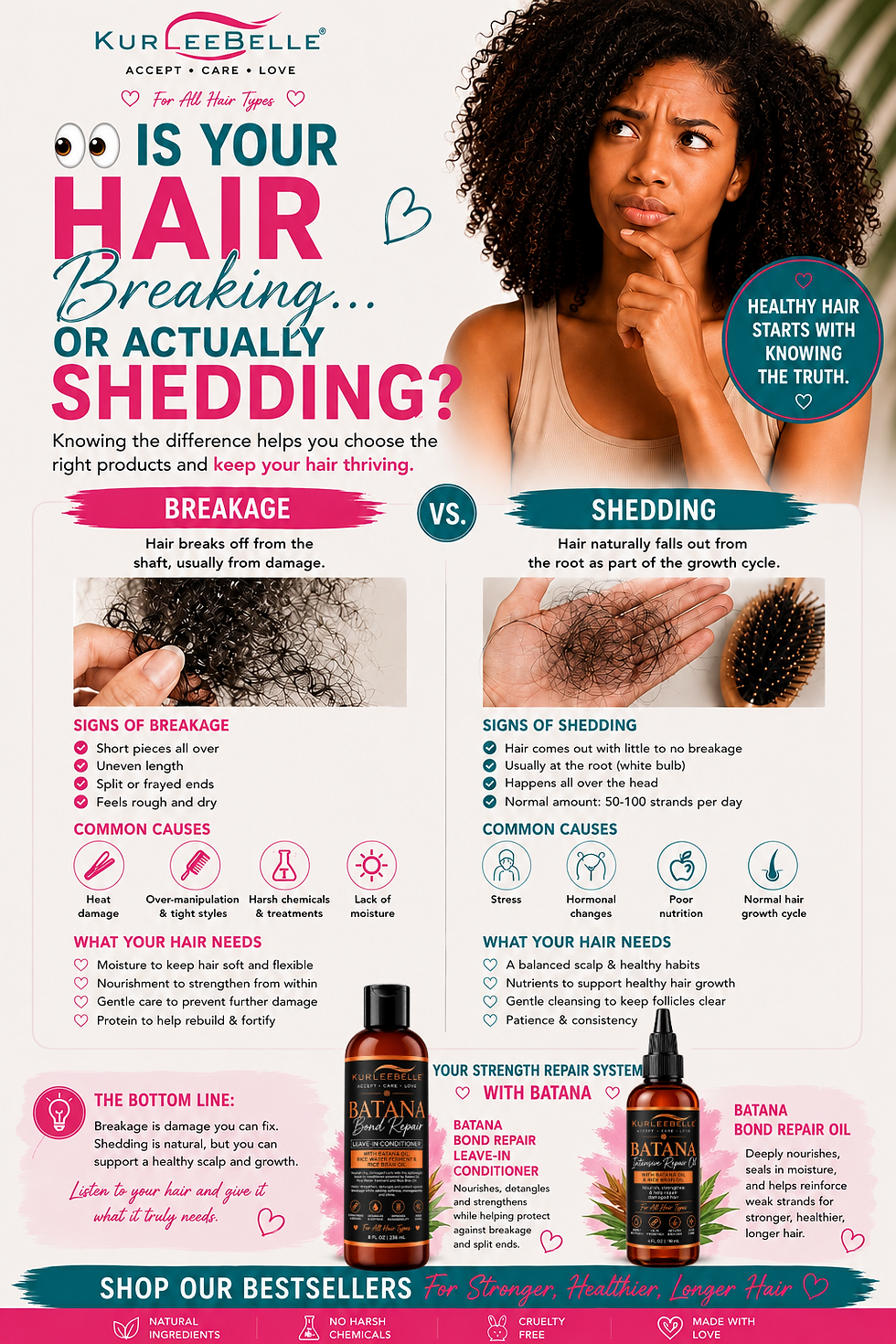
What If My Child’s Hair Is Extremely Dry or Breaking?
If you’re seeing more than ordinary dryness—particularly brittle ends, frequent snapping, roughness or breakage—you may want additional support for damaged strands.
That’s where the Kurlee Belle Batana Bond Repair Collection can fit into the routine.
The Batana Bond Repair Leave-In Conditioner, formulated with Batana Oil, Rice Water Ferment and Rice Bran Oil, is designed for dry, damaged and breakage-prone hair.
You don’t necessarily need to layer both Kurlee Belle leave-ins at the same time.
Instead, think about what the hair needs.
For everyday moisture and detangling:Reach for Thirsty Kurls Leave-In Conditioner.
For particularly dry, damaged or breakage-prone hair:Consider Batana Bond Repair Leave-In Conditioner as your leave-in step.
Then style and finish with a small amount of Batana Intensive Repair Oil if needed.
How Much Product Should I Put in My Child’s Curly Hair?
This is where many parents accidentally create another problem.
More product doesn’t automatically mean more moisture.
If your child’s hair is coated, sticky, greasy or dull but somehow still feels dry, product buildup may be part of the issue.
The amount needed depends on:
Hair density
Strand thickness
Curl pattern
Porosity
Hair length
How dry the hair is
Start with a small amount.
You can always add more.
Why Does My Mixed Child’s Hair Get Frizzy So Fast?
Frizz isn’t automatically a sign that something is wrong.
Curly hair naturally has texture and volume.
But if the hair goes from defined to extremely fuzzy shortly after styling, investigate your routine.
Possible reasons include insufficient styling product, touching the hair excessively while it’s drying, rough towel drying, humidity, dryness, sleeping without satin protection or repeatedly separating the curls.
One important rule:
Once you’ve styled the curls, let them dry.
Constantly touching wet curls can disturb the curl clumps you’ve just created.
How Should I Detangle My Child’s Curly Hair?
Please don’t wait until the hair is completely dry and then attack it with a brush.
Detangle when the hair has water and adequate slip.
Apply Thirsty Kurls and divide the hair into manageable sections.
Then begin at the ends.
Work through tangles gradually before moving upward toward the roots.
If you hit a knot, don’t force the brush through it.
Use your fingers and additional slip to gently work it apart.
This isn’t only about making wash day easier.
Gentle detangling can help reduce unnecessary breakage.
Why Is My Child’s Hair Tangled Every Morning?
Nighttime friction can undo a beautiful wash day surprisingly quickly.
Your child spends hours moving against a pillow while sleeping.
Cotton bedding can contribute to friction, tangling and frizz.
Try protecting the hair with a satin bonnet or satin pillowcase.
For longer curls, loosely gathering the hair toward the top of the head can also help preserve the curl pattern, depending on the texture and style.
Morning refreshes may then require significantly less manipulation.
How Do I Refresh My Child’s Curls in the Morning?
Don’t automatically redo the entire hairstyle.
First, identify which areas actually need help.
If most curls still look good, leave them alone.
For flattened or fuzzy sections, lightly dampen the hair and use your fingers to reactivate and reshape the curl.
Add a small amount of Thirsty Kurls or Kurl Defining Crème only where necessary.
Finger coil stubborn curls if needed.
This can preserve definition without coating the entire head in fresh product every morning.
How Often Should I Wash My Mixed-Race Child’s Curly Hair?
There isn’t one correct wash schedule for every mixed-race child.
The right frequency depends on the child’s scalp, activity level, texture, density, styling products and how quickly buildup develops.
Instead of following a rigid rule because someone online said curly hair should only be washed every certain number of days, watch the hair and scalp.
If there’s significant sweat, dirt, buildup or scalp discomfort, it’s probably time to cleanse.
A clean foundation can actually make your moisturizing products work better.
What If My Child Has Different Curl Patterns?
That’s completely possible.
The hair around the front may be looser.
The crown may be tighter.
The back may behave differently from everything else.
You don’t have to force every section to behave identically.
The tighter or drier areas may need slightly more leave-in or styling product.
Finer or looser sections may need less.
Treat the hair in front of you—not the curl chart.
A Simple Wash-Day Routine for Mixed Kids’ Curly Hair
Here’s an easy routine to try:
1. CLEANSEWash the hair and scalp to remove dirt and buildup.
2. CONDITIONCondition thoroughly and begin gently detangling.
3. MOISTURIZEApply Thirsty Kurls Leave-In Conditioner to wet or damp hair in sections.
4. DEFINEApply Kurl Defining Crème and finger coil, rake or scrunch depending on the curl pattern.
5. SEAL IF NEEDEDUse a small amount of Batana Intensive Repair Oil, concentrating on dry ends.
6. DRYAllow the curls to dry with minimal touching.
7. PROTECTUse satin at bedtime to help preserve moisture and definition.
Simple.
You don’t need ten products to take care of your child’s curls.
You need the right products doing the right jobs.
Frequently Asked Questions About Mixed-Race Children’s Curly Hair
What are the best products for mixed-race children’s curly hair?
Rather than choosing products solely because they’re marketed for “mixed hair,” look at what your child’s actual texture needs. For dry curls that need moisture and definition, consider a leave-in conditioner such as Kurlee Belle Thirsty Kurls, followed by Kurl Defining Crème. For particularly dry ends, a small amount of Batana Intensive Repair Oil can be used as a finishing step.
Why won’t my child’s curly hair stay moisturized?
Possible reasons include insufficient conditioning, product buildup, porosity, environmental conditions, using oil without water-based moisture or simply needing to adjust the amount and frequency of products.
Why won’t my mixed child’s curls stay defined?
Definition can be affected by styling technique, the amount of styling product, humidity, friction, touching the hair while drying and nighttime protection. Apply styling products while the hair is wet or damp and allow curls to set with minimal manipulation.
Should I put oil on my child’s curly hair every day?
Not necessarily. More oil isn’t automatically better. Use enough to address dryness without creating unnecessary buildup.
How do I keep my child’s curls defined overnight?
A satin bonnet or pillowcase can help reduce friction. Depending on the hair’s length and texture, loosely gathering the curls may also help preserve the style.
Should I brush mixed curly hair dry?
For many curly textures, dry brushing can separate the curl pattern and increase frizz. Detangling with water and a product that provides slip is often easier and gentler.
What should I use on extremely dry mixed hair?
Start with water-based moisture and conditioning rather than immediately adding more oil. For particularly dry, damaged or breakage-prone strands, the Batana Bond Repair Leave-In Conditioner can be incorporated into the routine, followed by a small amount of Batana Intensive Repair Oil when needed.
Can I use the same routine if my child’s hair is wavy instead of curly?
Yes, but adjust the amount. Finer, wavier textures often require less cream and oil than dense, tightly coiled hair.
Your Child’s Hair Doesn’t Need to Look Like Anyone Else’s
One of the most important things you can teach a child with textured hair is that frizz isn’t failure and curls don’t need to look identical to be beautiful.
The goal isn’t to chase someone else’s curl pattern.
It’s to understand the hair your child actually has.
Give it moisture.
Learn how it responds to products.
Detangle it gently.
Protect it at night.
And help your child learn that caring for their curls isn’t about “fixing” their hair.
It’s about learning how to care for it.
For dry curls that struggle to stay moisturized and defined, keep the routine simple:
Thirsty Kurls Leave-In Conditioner
MOISTURIZE + DETANGLE
Kurl Defining Crème
DEFINE + STYLE
Batana Intensive Repair Oil
NOURISH + SEAL
And for particularly dry, damaged or breakage-prone strands, bring in the Batana Bond Repair Collection for additional strengthening and conditioning support.
Moisturize. Define. Protect. Repeat.
Because once you understand what your child’s curls need, curly-hair day becomes a lot less confusing. Related Posts


Comments